Date: June 16, 2021

In the medical world, there are many ratios that doctors use to measure the health of their patients. For example, the BMI (body mass index) which gives an indication of body fat is calculated by dividing a person’s weight by the square of their height in metres. The figure obtained is then compared with data gathered for healthy individuals to see if a person is obese.
Another common health indicator is the cholesterol ratio which comes from dividing total cholesterol by the “good cholesterol’’ known as HDL. Like BMI, there is an ideal healthy range and if the person’s ratio falls outside, then there is a possible risk of heart disease.
Usually, these ratios are measured over time for individuals to see if they improve or worsen. Also, they are not studied in isolation but are combined to obtain a composite picture of a person’s health. The same logic applies in the financial industry.
Just as in medical circles, financial markets also use ratios to gauge health, in this case, that of companies. For example, if a company pays a total of S1m in interest every year and has S$10m cash, then its “interest coverage ratio’’ can be said to be 10/1 or 10, ie. for every S$1 of interest it owes, it has S$10 to cover payment.

In the case of interest coverage, it should be obvious that a higher number is preferred because it shows that the company has ample cash to settle its annual interest charges.
However, higher is not always better – for example, for debt/equity, a lower number is preferred because this gives an idea of how much money the company has borrowed.
Furthermore, it is possible to use ratios in conjunction with one another to get deeper health insights. If for example a company has a high debt/equity ratio, and its interest coverage is low, this could be a warning of possible financial problems in the future. Stated differently, we say in such situations that “leverage risk’’ is high.
Many ratios can be calculated, but not all make sense, so investors should familiarize themselves with the main useful ones that can be extracted from the three financial statements which companies usually issue every six months – the income statement, the balance sheet and the cash flow statement.
Income statement analysis
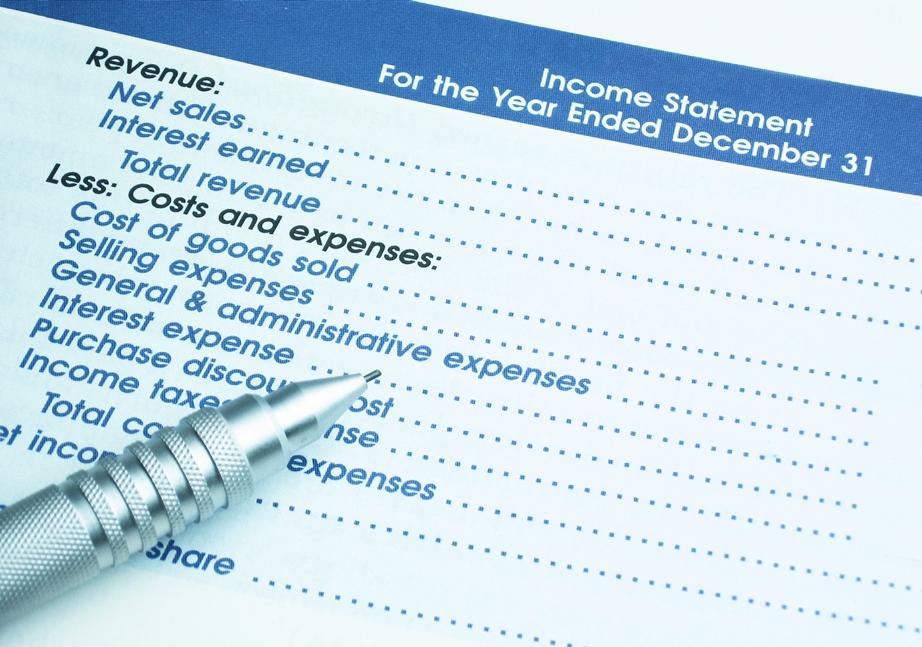
As the name implies, a company’s profit and loss or income statement shows how much money it made during the reporting period. It can provide clues as to a company’s profitability and how well it is using its resources.
Typical ratios extracted are known as profitability rations and are gross profit margin, operating profit margin and net profit margin. These are studied over a period of several years to see if they are improving over time. Sometimes, they are compared with the company’s peers which operate in the same industry.
Balance sheet analysis
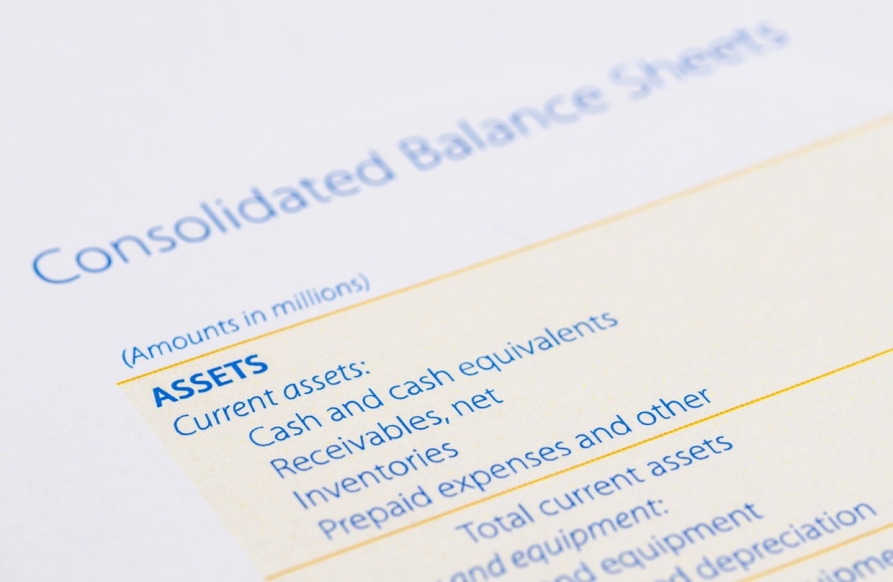
Balance sheets provide a snapshot company’s financial position at a point in time. The total assets figure can be compared to previous years to see if the company is growing its business or simply maintaining status quo.
If assets are growing but if debt/equity is also increasing, this may not be desirable because it suggests the company is funding its growth through borrowing. More investigation is therefore necessary.
Other ratios used in balance sheet analysis include inventory turnover, which measures how quickly a company sells and replaces its stocks, and various liquidity ratios that give an idea of how much money a company has to pay its immediate debts.
Cash flow statement analysis
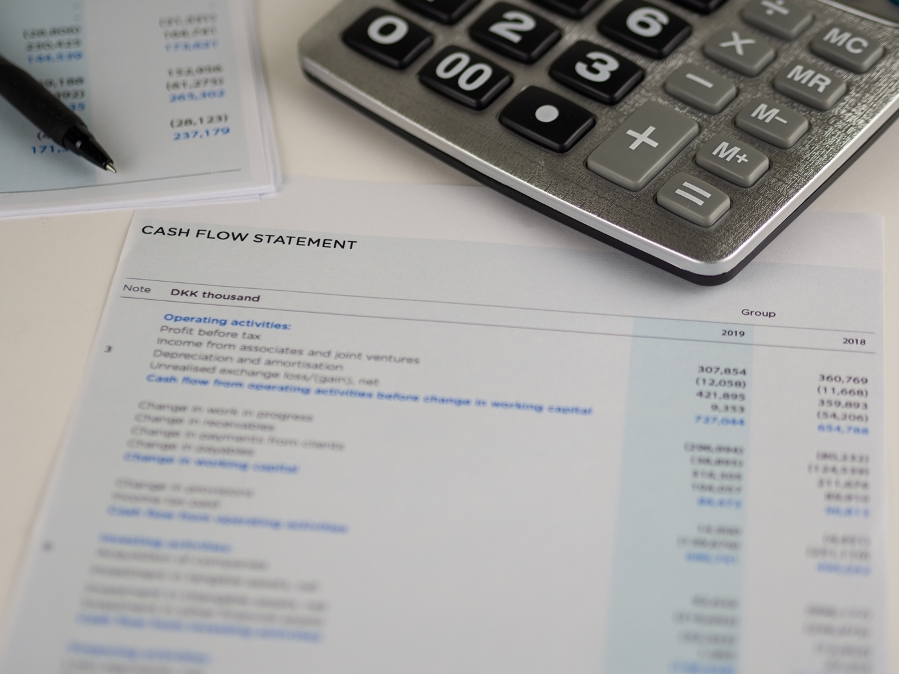
The cash flow statement is used to determine if a company’s operations are generating healthy cash flow or whether there are liquidity issues. Analysts usually look at free cash flow generation ability which is cash flow from operating activities less capital expenditure and study trends over time to spot possible problems.
The annual report
Like in medicine, investors should use all the information they derive from analysis of a company’s financial statements to obtain a composite picture of that company’s financial health. Before investing you should read the company’s annual report as this also contains messages from the chairman and chief executive on performance over the past year as well as future strategies. In addition, investors should be familiar with the key audit matters which provide the independent auditors views of the matters that, in the auditor’s professional judgment, were of most significance in the audit of the financial statements of the current period. Key audit matters are selected from matters communicated with those charged with governance.
Want to learn how to read and understand company annual reports? Gain a deeper understanding into various statements and financial ratios that you need to look at when considering the company for long term investment. Sign up to learn more at SIAS’s Financial Analysis: Evaluate Financial Statements Workshop.